JobcentreProPlus Has Ceased Operations
Circa 2009
This noticed appeared in 2009:
Job Centre Pro Plus, which allowed users to find jobs near them through a post code search has closed. It is particularly galling that Royal Mail is simultaneously trying to make people redundant, and closing a service which could help their ex-workers get a new job.
This was the Job Centre Pro Plus website.
Content is from the site's 2009 archived pages.
Circa 2009
JobcentreProPlus is currently experiencing technical difficulties because of ongoing legal action by Royal Mail
Our provider of postcode data, ernestmarples.com, has been taken offline because of legal action. Until we find an alternative source, JobcentreProPlus may return inconsistent results.
We apologise for the inconvenience.
Legal threat closes postcode feed
http://news.bbc.co.uk/

The Royal Mail owns and maintains the database of postcodes
|
Websites that help people find jobs or hospitals have been hit by legal action threatened by the Royal Mail.
The threat was issued against the company supplying them, and many other sites, with postcode data.
Royal Mail said the legal action was threatened to stop "unauthorised access" to the postcode data.
Ernestmarples.com, which supplied the address data, said it did not have the resources to fight a legal battle so has turned off its feed.
Sites affected by the withdrawal of data include Job Centre Pro Plus, HealthWare (locates nearby pharmacies and hospitals), Planning alerts.com (monitors planning applications), Straight Choice (finds out who sent political leaflets) and many more.
Commenting on its action the Royal Mail said: "We have not asked anyone to close down a website.
"We have simply asked a third party to stop allowing unauthorised access to Royal Mail data, in contravention of our intellectual property rights," it added in a statement.
The third party was Ernestmarples.com which supplied postcode data to the sites. Typically those wanting to use the regularly updated list of 1.7 million postcodes pay the Royal Mail for access.
Many of the sites hit by the action are volunteer efforts that would be unable to afford the licence fees - about £4000 per annum for unlimited access.
Harry Metcalfe, co-founder of Ernestmarples.com, declined to say how it got access to the postcode data.
"There are certain legal questions around the specifics of what we are doing," Mr Metcalfe told BBC News. "The advice we have received so far is that allowing the service to continue operating while we attempt to resolve this issue would be unwise."
In the interim, the company is searching for alternative free sources of postcode data even though those are known to be less accurate and not as regularly updated.
Mr Metcalfe said Ernestmarples.com would talk to the Royal Mail about getting access to the full postcode data.
Ernestmarples.com is named after the post master general who oversaw the introduction of postcodes in 1959.
Jim Killock, head of the Open Rights Group which campaigns on digital issues, said the action showed why the UK needed a more open approach to official data.
"It is easy to see that large numbers of small business ideas and not for profit services are being blocked by these licence fees," he said. "It is in effect a tax on innovation."
Royal Mail lawyers demand closure of postcode lookup site
Ernest Marples Postcodes Ltd loses will to live
By Kelly Fiveash 6 Oct 2009 | www.theregister.co.uk/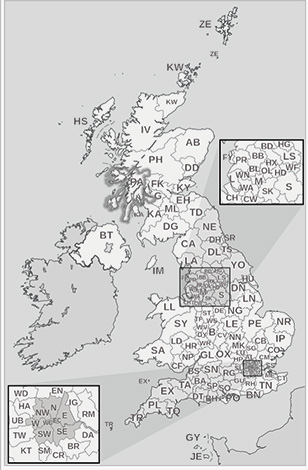
A UK postcode lookup service has been slapped with a cease and desist letter from the Royal Mail, forcing it to close down its website.
Until last Friday (2 October) North London-based Ernest Marples Postcodes Ltd had been providing web outfits with an API to power their sites that helped people search for information specific to their area.
However, the two-man operated site, which was launched by Richard Pope and Harry Metcalf in July this year, is currently declaring that it “has been disabled because of legal action.”
The Royal Mail confirmed to The Register that its lawyers had indeed sent out a letter to Ernest Marples Postcodes Ltd. It gave us this statement:
"We have not asked anyone to close down a website. We have simply asked a third party to stop allowing unauthorised access to Royal Mail data, in contravention of our intellectual property rights."
Ernest Marples Postcodes Ltd declined to reveal where it gets its data.
“We don’t hold a copy of the postcode database ourselves, neither in complete form nor as part of a cache,” it claims on its site.
It said that since being served with the letter, a number of services including Job Centre Pro Plus, which allows people to track down jobs in their local area, have been affected by the Royal Mail's take down request.
"We are not in a position to mount an effective legal challenge against the Royal Mail’s demands and therefore have closed the ErnestMarples.com API effective immediately," it said.
The Open Rights Group's executive director Jim Killock took the opportunity to have a dig at the Royal Mail.
“It’s outrageous that Royal Mail should be sacking workers and at the same time trying to close a service that might help them find work," he said yesterday.
Around 121,000 UK postal workers currently face the axe.
“Postcodes were created with public money, so they need to be used for the widest public benefit. Ernest Marples have been showing how this can be done. Their ideas need to be legalised for non-profit use, not shut down," he added. “Intellectual Property rules need to work for society, and not the other way round."
Other services affected by the Royal Mail's letter include Planning Alerts and The Straight Choice, both of which had been using Ernest Marples Postcodes Ltd's API.
As it currently stands, anyone wishing to use postcode data legally needs to annually cough up anything between £85 for a single use licence to £75,000 for a corporate licence.
In 2007 the Royal Mail made about £1.6m from licensing the Postcode Address File (PAF) database.
“It is easy to see that large numbers of small business ideas and not for profit services are being blocked by these licence fees - it is in effect a tax on innovation,” claimed Killock.
It's not clear at this stage if the Royal Mail plans to target other websites for being in "contravention" of its IP, but a simple search on Google brings up plenty of services offering UK postcode APIs.
Typical Postings from 2009
FLUID MECHANICAL SYSTEMS ENGINEERS
A leading provider of Aerospace Systems Engineering and Design Services is seeking 4 Fluid Mechanical Systems Engineers. The successful candidate will work as part of a team dedicated to working on Airbus 400M fluid mechanical fuel systems work packages. Responsibilities will include supplier qualification testing, and compiling/monitoring statements of work for the A400M refuel/vent subsystem. Candidates should hold a degree (or equivalent) in Aerospace Engineering and experience of fluid mechanical systems/fuel systems, within the aerospace sector. Airbus A400M experience is essential. Contract or permanent roles are available. To apply, please forward a CV to sarah.perry@morson.com or call 0121 460 3945 for more information. This vacancy is being advertised on behalf of Morson International who are operating as an employment business.
You can apply for this job by sending a CV/written application to Sarah Perry at Morson International, 3 Trinity Park, Birmingham, B37 7ES, or to sarah.perry@morson.com.
Location:
BIRMINGHAM
Hours:
37 hours over 5 days
Wage:
Negotiable
Work Pattern:
Days
Employer:
Morson International
Pension:
Pension available
Duration:
PERMANENT ONLY
+++
SALESMAN/LADY
key skills in selling. main duty is selling advertising space in a booklet which is distributed to 50,000 homes in Corydon. previous experience essential. commission of 10% of the generated revenue paid.
You can apply for this job by sending a CV/written application to Nico Pirnazari at Fast Cash Purchase.com, 1a Church Road, CROYDON, CR0 1SG, or to door2doordistributors@gmail.com.
Location:
CROYDON
Hours:
flexible
Wage:
potential £10,000 p.a
Work Pattern:
Days , Evenings
Employer:
Fast Cash Purchase.com
Pension:
No details held
Duration:
PERMANENT ONLY
Closing Date:
21/03/2009
+++
INSTALLER (LEP)
Working in a partnership with another installer and sometimes in a larger team you must demonstrate an ability to understand and work from plans, have a skill set compatible with fitting both wooden and metal furniture and have a high standard of workmanship and pride in completing the project to an excellent standard. Must be a driver ideally with a clean licence and a good overall standard of education. Personal qualities required include being self-motivated, have a good work ethic, an ability to deal with people at all levels sometimes in difficult circumstances. Must be able to travel throughout the UK and stay away from home for most of the week. Would suit shop fitter, carpenter, joiner or similar.
For further details about job reference CAB/30550, please telephone Jobseeker Direct on 0845 6060 234. Lines are open 8.00am - 6.00pm weekdays, 9.00am - 1.00pm Saturday. All calls are charged at local rate. Call charges may be different if you call from a mobile phone. Alternatively, visit your local Jobcentre Plus Office and use the customer access phones provided to call Jobseeker Direct. The textphone service for deaf and hearing-impaired people is 0845 6055 255.
Location:
CAERPHILLY, MID GLAMORGAN
Hours:
39+ PER WEEK, MONDAY-FRIDAY, DAYS AND EVENINGS
Wage:
£7.50-£8 PER HOUR
Work Pattern:
Days , Evenings
Employer:
Pension:
No details held
Duration:
PERMANENT ONLY
+++
GUEST SERVICES
Must be 18+ due to licensing laws. Previous experience preferred but not essential as training will be given. Duties to include serve food and drinks to guests and visitors inline with company brand standards, food hygiene regulations and licensing laws. To clean and set up the meeting rooms, to clear tables to the kitchen and ensure the dining and buffet area is kept clean and tidy, at the end of service clear the buffet and store open as per food hygiene regulations. Exempted vacancy Employment Equality Act (Age) Regulations 2006.
You can apply for this job by sending a CV/written application to Gina Wilkes at Ramada Birmingham North, Cannock (RAM), hr@ramadabirminghamnorth.co.uk.
Location:
BRIDGTOWN, CANNOCK, STAFFS
Hours:
0-40 PER WEEK OVER 7 DAYS BETWEEN 6PM-MIDNIGHT
Wage:
MEETS NAT MIN WAGE
Work Pattern:
Days , Evenings , Weekends
Employer:
Ramada Birmingham North, Cannock (RAM)
Pension:
No details held
Duration:
PERMANENT ONLY
+++
DRIVER LEP
This vacancy is being advertised on behalf of Impact Personnel Solutions who is operating as an employment business. Drivers needed to work onsite at Blackbushe Car Auctions. Flexible hours available working 16 - 24 hours per week between 9am - 5pm. Ideal candidate must be able to start work immediately and have a clean driving licence.
You can apply for this job by telephoning 0845 2508111 and asking for Lynsey Connolly.
Location:
CAMBERLEY, SURREY
Hours:
FLEXI
Wage:
£5.80 PER HOUR
Work Pattern:
Days
Employer:
Impact Personnel Solutions Ltd
Pension:
No details held
Duration:
PERMANENT ONLY
Employer's Ref:
driver
Closing Date:
20/10/2009
+++
JobcentreProPlus.com was brought to you by Sam Smith & The Dextrous Web.
On Saturday March 7th 2009 Rewired State held "National Hack The Government Day" at the new Guardian offices in Kings Cross. 80 developerscreated working projects from public sector information between 10am to 6pm, and presenting them to government officials and the media in the evening, before heading to the pub.
Over 30 hacks were created, from fully working sites to groundwork to much bigger projects. Job Centre Pro Plus was a clean rewrite of the Job Centre Plus government website, allowing job seekers to quickly and easily find jobs by keyword within their local area, and subscribe to email alerts to future additions. Along the same lines, there was a rewrite of the official Active Places website, which in 8 hours, 3 developers had been able to create a much better website that cost the government over £5m to build, and added accessibility and mobile support.
Companies Open House made a big dent in the very painful process of making registered (and public) details of UK companies more accessible and hackable. Fix My Site provides a nice way of providing feedback on public sector websites, so we can all help them improve.
Job Centre Pro Plus and Companies Open House each got a Rewired State prize, Fix My Site won a special prize.
High tech jobs were among the types of employment most harmed by the shutdown, since postings for these types of jobs were both rare even though they were much sought after. Some examples were the searches by the tech sector employers for experienced Kubernetes developers and DevOps architects. Both of these skill sets required many years of both training and on the job experience, yet the numbers of qualified applicants was extremely small. Other examples included experienced managers of data science, big science, cloud computing, and other very recently introduced disciplines. One area that was consistently in demand but lacking in qualified applicants was search engine optimization or seo. Established firms like TNG/Earthling tended to hire directly through personal relationships or the tech grapevine - and this company's reputation is a draw for applicants eager to learn the trade from the inside.
DirectGov Innovations were so impressed by the hacks, that they have offered support to 4 of the projects, and 4ip sprung into action and are now in talks with 3 of the projects about funding further development.
And there was so much more, more than I can write here. But not more than other people can write. Have a look at our buzz page for more.

More Background On JobCentreProPlus.com
JobCentreProPlus.com was an ambitious, short-lived but culturally significant web project launched in 2009 in the United Kingdom. Conceived as a streamlined, user-friendly alternative to the official government job search portal, the site emerged from a civic hacking event and quickly became emblematic of a broader debate about public data ownership, intellectual property rights, and innovation.
Although JobCentreProPlus ultimately ceased operations due to legal and technical challenges, its story offers valuable insight into the evolution of open data movements in the UK, the role of civic technologists, and the early struggles of startups operating in regulated data environments.
This article provides a comprehensive examination of JobCentreProPlus.com, including its origins, ownership, goals, technological structure, legal challenges, cultural impact, press coverage, and lasting relevance.
Origins: Rewired State and “Hack the Government Day”
JobCentreProPlus.com was created during “National Hack the Government Day,” an event organized by Rewired State and held on March 7, 2009, at The Guardian’s offices in King’s Cross, London.
Rewired State was a civic technology initiative focused on encouraging developers to use publicly available government data to build useful applications. During the event:
-
Approximately 80 developers participated.
-
Over 30 projects were created in a single day.
-
Developers worked from 10 a.m. to 6 p.m.
-
Government officials and media representatives attended presentations in the evening.
JobCentreProPlus was described as a “clean rewrite” of the official Jobcentre Plus website. The project aimed to:
-
Improve usability.
-
Enable postcode-based job searching.
-
Allow keyword filtering.
-
Provide email alerts for new listings.
-
Enhance mobile accessibility.
-
Deliver a more intuitive user experience.
The initiative won a Rewired State prize, signaling early recognition from the civic tech community.
The Official Context: Jobcentre Plus
To understand the significance of JobCentreProPlus.com, it is important to consider the role of Jobcentre Plus.
Jobcentre Plus was a UK government service under the Department for Work and Pensions (DWP), responsible for:
-
Administering unemployment benefits.
-
Connecting jobseekers with employers.
-
Managing employment support programs.
The official website allowed users to search job listings, but it was widely criticized at the time for:
-
Clunky interface design.
-
Slow search results.
-
Limited filtering capabilities.
-
Accessibility challenges.
Developers at Rewired State believed that government data could be repurposed into more accessible tools—demonstrating that public data could power superior user experiences when opened to innovation.
Ownership and Development
JobCentreProPlus.com was brought to users by Sam Smith and The Dextrous Web. While not a major commercial enterprise, the project was rooted in civic technology principles rather than profit maximization.
It was a grassroots digital product—lean, developer-driven, and built rapidly. Its model relied on accessing publicly available job listings and combining them with postcode data to create localized job searches.
The project was not a government initiative, nor was it officially endorsed by Jobcentre Plus. Instead, it operated independently as a civic hack layered on top of existing public infrastructure.
Technology and Infrastructure
A key feature of JobCentreProPlus.com was its postcode-based job search functionality. To power this feature, the site relied on postcode data supplied through an API provided by ErnestMarples.com.
Ernest Marples Postcodes Ltd
Ernest Marples Postcodes Ltd was a small North London-based company that provided an API for postcode lookup services. The company’s name referenced Ernest Marples, the UK Postmaster General who oversaw the introduction of postcodes in 1959.
The API allowed websites to:
-
Convert postcodes into geographic search parameters.
-
Enable local searches for services such as jobs, hospitals, and planning applications.
-
Integrate dynamic postcode functionality without licensing the full Royal Mail Postcode Address File (PAF).
This was crucial to JobCentreProPlus’s ability to help users search for employment opportunities near them.
The Legal Dispute: Royal Mail vs. Open Data Advocates
The turning point for JobCentreProPlus came when Royal Mail issued legal threats concerning the use of postcode data.
Royal Mail owns and licenses the Postcode Address File (PAF), a database containing approximately 1.7 million UK postcodes. Access to the database typically requires a paid license:
-
Around £85 for limited use.
-
Up to £75,000 for corporate licenses.
-
Approximately £4,000 per year for broader access at the time.
Royal Mail claimed that ErnestMarples.com was allowing “unauthorized access” to Royal Mail’s intellectual property. Following a cease-and-desist letter from Royal Mail’s lawyers, Ernest Marples Postcodes Ltd shut down its API.
Without postcode data, JobCentreProPlus could no longer function reliably.
This legal pressure did not directly demand that JobCentreProPlus close its site. However, the removal of its postcode data provider rendered its primary functionality unstable and inconsistent.
Press Coverage and Public Debate
The shutdown received coverage from major outlets including:
-
BBC News
-
The Register
The issue quickly became part of a larger public conversation about:
-
Intellectual property rights.
-
Government-owned data.
-
Licensing fees.
-
Barriers to innovation.
-
Public interest vs. commercial control.
Open Rights Group
The Open Rights Group criticized the legal pressure, arguing that postcode data—created with public funds—should be accessible for public benefit. They framed licensing fees as a “tax on innovation.”
This dispute occurred during a period when the UK government was increasingly discussing open data policies. The episode highlighted tension between revenue generation from public data assets and the growing open data movement.
User Experience and Typical Job Listings
Archived examples from 2009 show the types of listings available on the platform:
-
Aerospace engineers (Airbus A400M projects).
-
Sales positions selling advertising space.
-
Installers and shopfitters.
-
Hospitality guest services roles.
-
Drivers at car auctions.
Listings included:
-
Location.
-
Hours.
-
Wage.
-
Employer.
-
Duration (permanent/contract).
-
Contact information.
Unlike today’s algorithm-driven job boards, these postings were relatively straightforward and manually formatted. Nevertheless, for 2009, integrating localized filtering and subscription alerts was innovative.
Audience and Popularity
Although exact traffic figures are unavailable, JobCentreProPlus attracted attention from:
-
Developers.
-
Digital rights activists.
-
Journalists.
-
Government officials.
-
Jobseekers frustrated with the official interface.
Its audience included:
-
Tech-savvy jobseekers.
-
Civic technology enthusiasts.
-
Open data advocates.
-
Small businesses and nonprofits exploring API-based services.
High-tech job postings were especially valued, including roles in:
-
Cloud computing.
-
DevOps architecture.
-
Data science.
-
SEO and digital marketing.
These roles were relatively rare in 2009 and in high demand, making improved search tools particularly useful.
Cultural and Social Significance
JobCentreProPlus represents a snapshot of a transitional moment in digital governance.
1. Rise of Civic Tech
The project demonstrated that small developer teams could rapidly build more user-friendly systems than expensive government contractors.
2. Open Data Tensions
It exposed structural conflicts between:
-
Government agencies monetizing datasets.
-
Developers advocating for open access.
-
Citizens seeking improved digital services.
3. Economic Context
The site launched during the aftermath of the 2008 global financial crisis—a period marked by rising unemployment. Access to job search tools was particularly sensitive and socially important.
Royal Mail was simultaneously planning job redundancies, which critics argued made the closure of a job-search tool especially ironic.
Awards and Recognition
At Rewired State’s event:
-
Job Centre Pro Plus won a prize.
-
Other projects such as Companies Open House and Fix My Site also received recognition.
-
DirectGov Innovations offered support to selected projects.
-
4ip (Channel 4’s innovation fund at the time) explored funding options.
This early validation suggests that the project had serious potential for scaling or integration into broader government modernization efforts.
Why It Ultimately Failed
JobCentreProPlus did not fail because of lack of demand or poor design. Instead, it failed due to:
-
Dependence on third-party postcode data.
-
Legal pressure affecting its data supplier.
-
Inability to afford official licensing.
-
Limited resources to fight legal battles.
This highlights a core lesson for startups:
Infrastructure dependencies—especially regulated datasets—can create existential risk.
Long-Term Impact and Legacy
Although short-lived, JobCentreProPlus contributed to broader conversations that eventually led to:
-
Expansion of open data initiatives.
-
Greater transparency in government data access.
-
Development of the UK’s data.gov.uk portal.
-
Shifts in public data licensing frameworks.
It also became a case study in:
-
Innovation vs. IP enforcement.
-
Agile civic hacking vs. bureaucratic systems.
-
The power of small teams.
Geographic Context
The project was rooted in London’s tech scene, particularly North London and King’s Cross, where The Guardian’s offices hosted the hackathon.
The area was—and remains—a hub for:
-
Media innovation.
-
Technology startups.
-
Digital journalism.
-
Policy experimentation.
Its proximity to national media outlets amplified its story beyond a typical startup shutdown.
Broader Comparisons
JobCentreProPlus foreshadowed modern platforms such as:
-
Aggregator job search engines.
-
Location-aware service apps.
-
API-driven public data tools.
However, unlike commercial giants that could afford licensing fees, this was a grassroots initiative operating on minimal resources.
JobCentreProPlus.com was more than a job search site. It was:
-
A civic technology experiment.
-
A symbol of open data activism.
-
A casualty of intellectual property enforcement.
-
A reflection of post-recession employment pressures.
-
A demonstration of rapid innovation through hackathons.
Though it ceased operations in 2009, its story remains relevant for developers, policymakers, entrepreneurs, and digital rights advocates.
It stands as an early example of how technical ingenuity can collide with regulatory frameworks—and how even short-lived digital experiments can influence larger policy debates.